




DRAPED IN LIGHT BY DANA HAREL OF WHITE DIRT STUDIO
White Dirt Studio is the ceramics practice of Dana Harel, built on a close working knowledge of one material and what heat can do to it. ORA is the studio's first step beyond the kiln and into lighting, and the first time textile has taken the lead in her work. The series spans tented table lamps and a suspended floor lamp of far greater scale, each proportioned differently but shaped by the same restraint. Each lamp is defined by a shade that holds a single, decisive shape, with a low glow that rewards a closer look.
ORA is now on view at Armadillo's Los Angeles and San Francisco showrooms alongside Venezia, our first pure silk collection, both bodies of work reimagining materials with old world associations for modern spaces. Below, Harel reflects on how ORA began, how each form was resolved and what it feels like to see her work placed in new company.
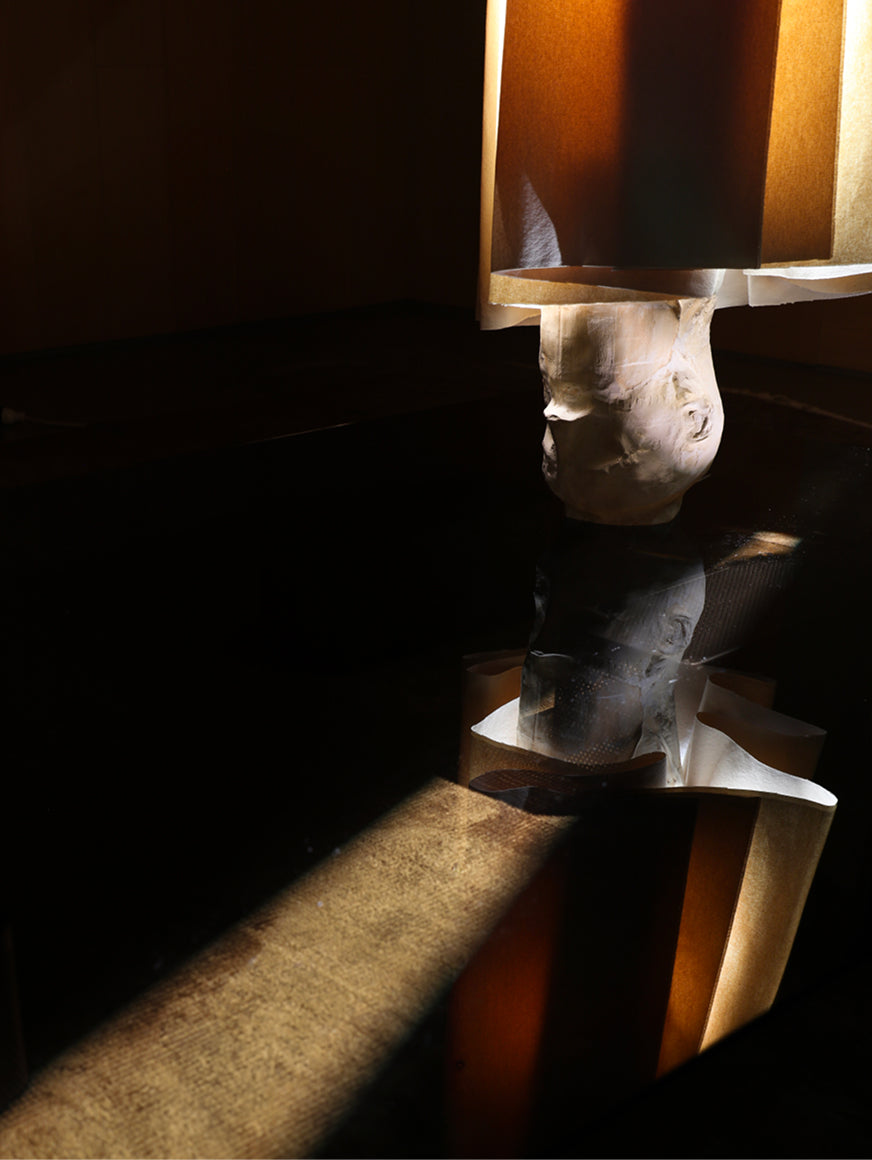
ORA has been described as both an artifact and an everyday fixture. For someone encountering your work for the first time, what does that phrase mean in practice?
In practice, it means ORA exists as both a sculpture and something you live with and use. I like the word ‘artifact’ because I'm interested in objects that seem to carry a history or a presence beyond their function. ORA has that presence even when it's turned off. When it's lit, the atmosphere changes. I’m interested in creating a feeling, almost like lighting a candle.

“I’M DRAWN TO MATERIALS THAT CAN TRANSFORM AND MOVE BETWEEN DIFFERENT STATES. PORCELAIN IS A GOOD EXAMPLE OF SUCH TRANSFORMATION.”
Your practice takes its name from kaolin clay, known as 'white dirt.' You've spoken about the material's history, sought after by royalty while remaining casually available to the masses. How does that dichotomy inform your work?
I'm drawn to materials that can transform and move between different states. Porcelain is a good example of such transformation. It starts powdery and earthy, and once it's fired, it becomes white, hard, and sometimes translucent. The name White Dirt has a story and a deeper meaning for me.
White dirt is another term for kaolin, one of porcelain's key ingredients. I first came across the term
in the Carolinas, where I saw kaolin being sold in bags for consumption, for its minerals. At the time,
I was working primarily with porcelain, and I loved that something coming directly from the earth could, through process and heat, become something incredibly refined. I was drawn to that complexity - a material that could hold such different meanings depending on its context.
ORA marks your studio's first foray into light. What did working with light and drapery teach you?
It taught me that the material around the light could become the form itself, rather than simply a shade. Drapery helped me to give up some control over that form. I could begin with a simple geometry, then let gravity, folds and tension determine what happened next. Making the fabric rigid allowed me to hold onto that moment - the softness and gesture of the drape became the structure itself. ORA began with the story of the ortolan, a French dish traditionally eaten with a napkin covering the diner's head. I remember seeing that strange ritual in a film, and the image stayed with me. Later in the studio, the napkin became a shade, the head became a base, and my first body of work in lighting unfolded.
ORA holds three distinct forms, from tented table lamps to a suspended, trapeze-like floor lamp. Talk us through how scale and form dictate how each piece holds and casts light.
The drapery both hides and reveals the light. In the smaller ORA pieces, it gathers around the light almost like clothing around a body. The large ORA came from thinking about the curtain as an architectural element. I took something that normally sits at the edge of a room and brought it into the center, held in a pristine, folded position. The light itself is subdued - it’s there to create atmosphere rather than illuminate the entire room. I'm drawn to that tension in drapery between revealing and hiding.
Venezia, Armadillo's first pure silk collection, shares something with your own work in porcelain: both are materials with a history of formality now living in everyday settings. Does that tension show up in how you think about your own practice?
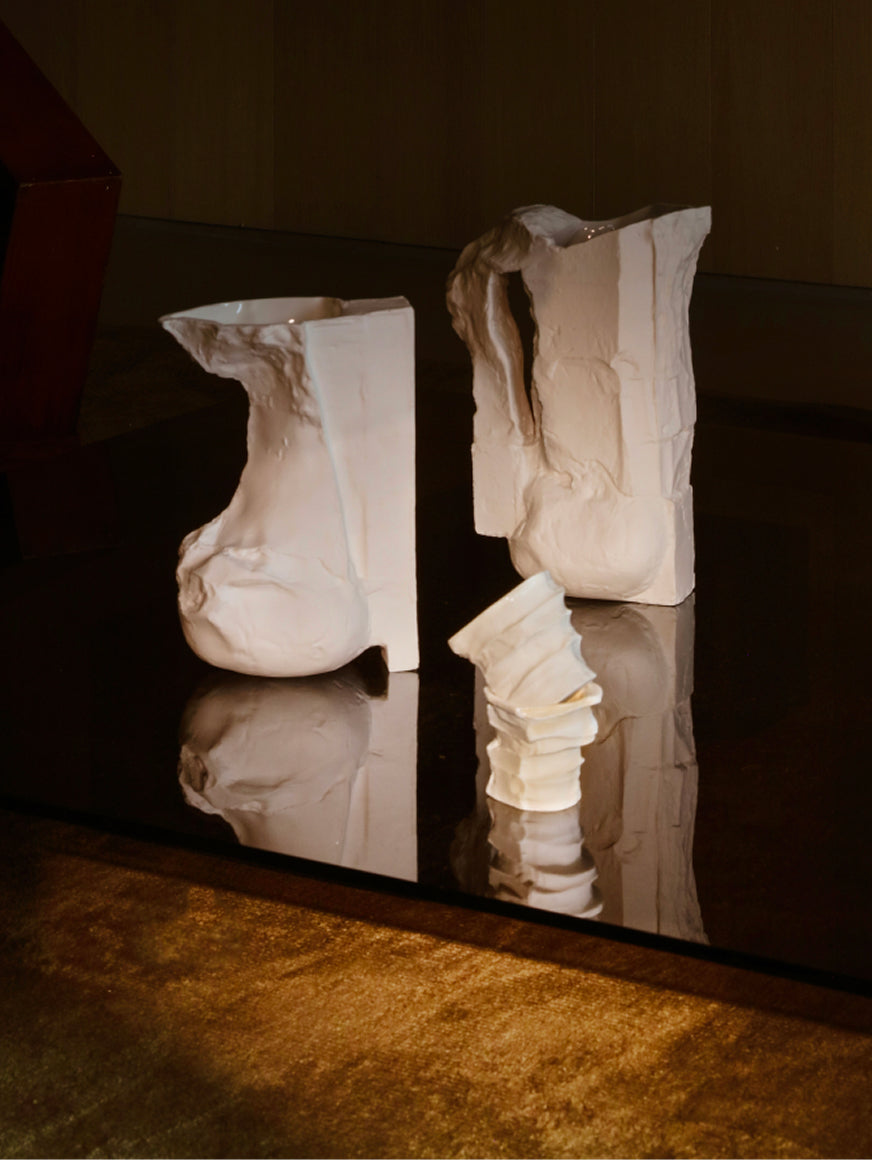
When I think of silk, I think of garments, not something you walk on. And with porcelain, I think of something delicate and highly finished. In my own work, I do almost the opposite - my porcelain vessels can be crude, heavy and unglazed. I love how both challenge what we expect from a material.
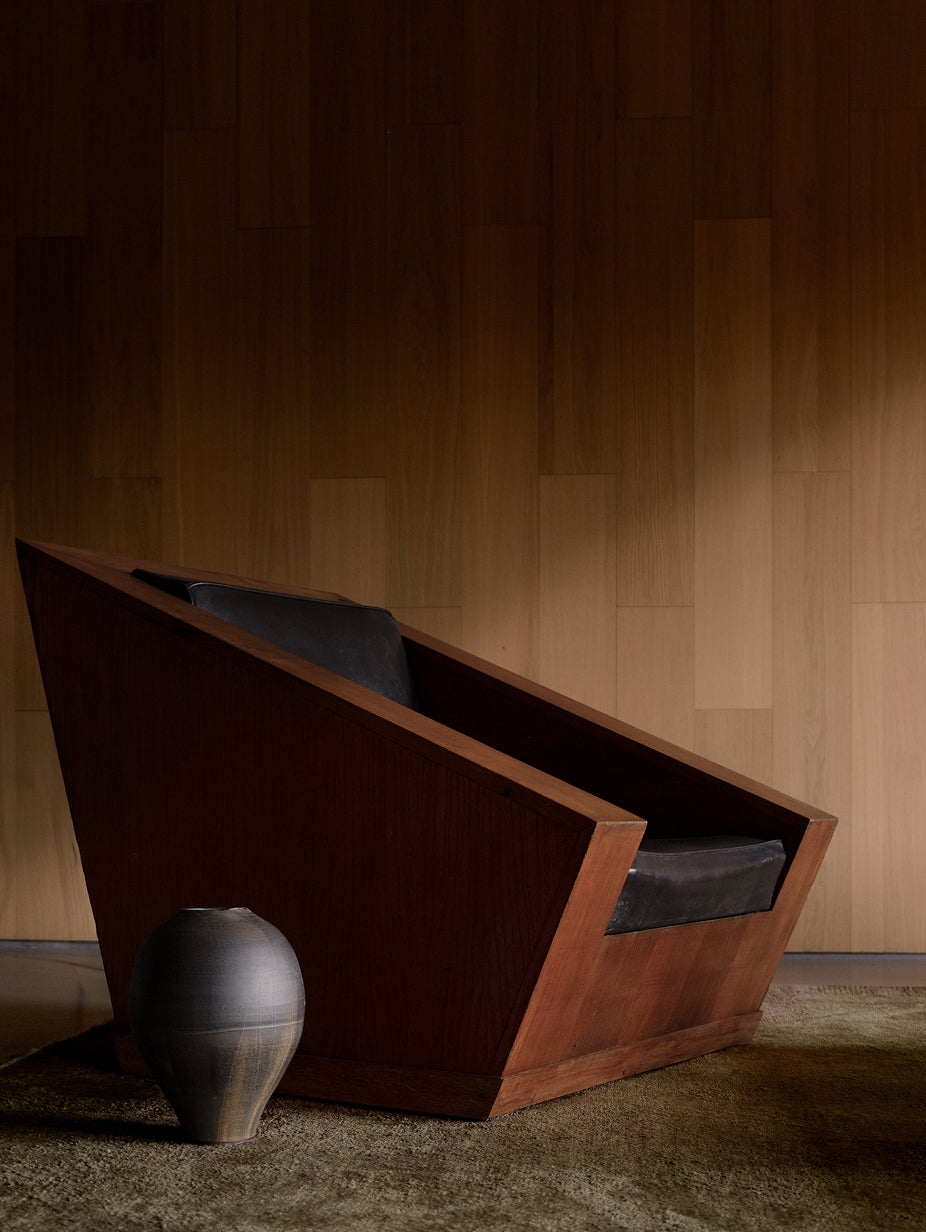
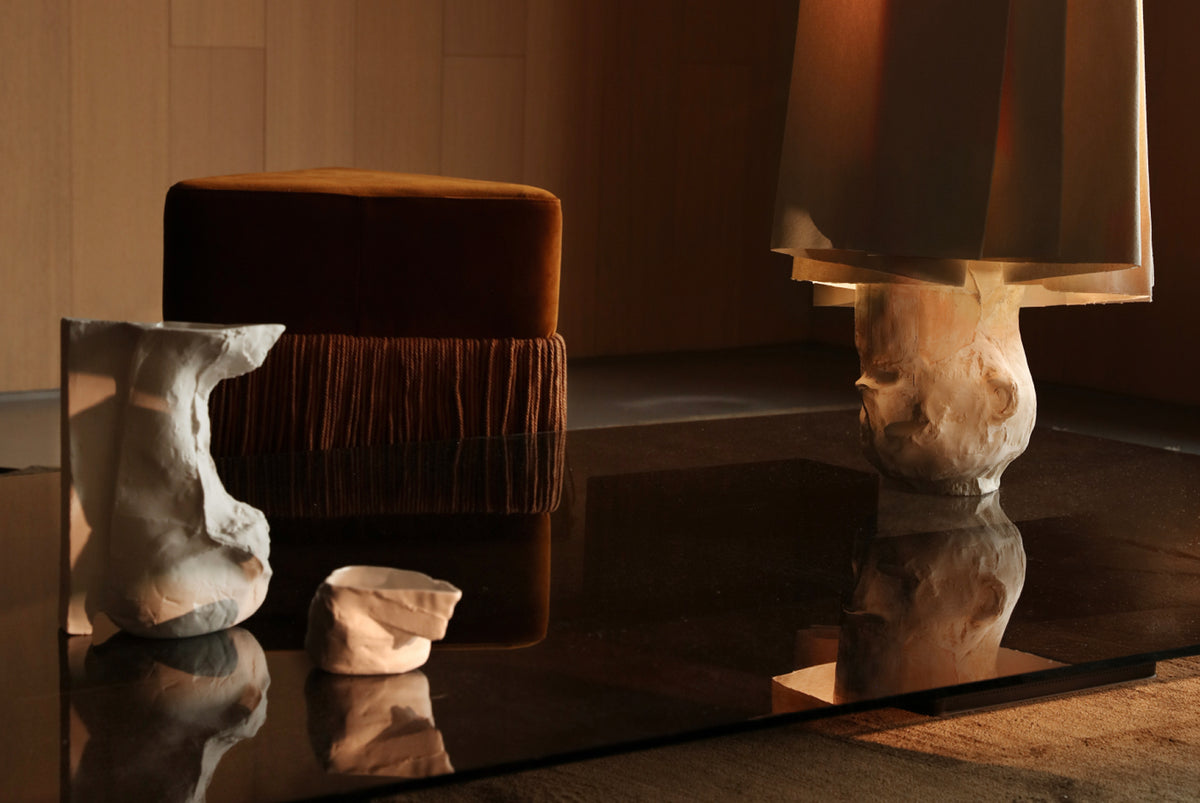
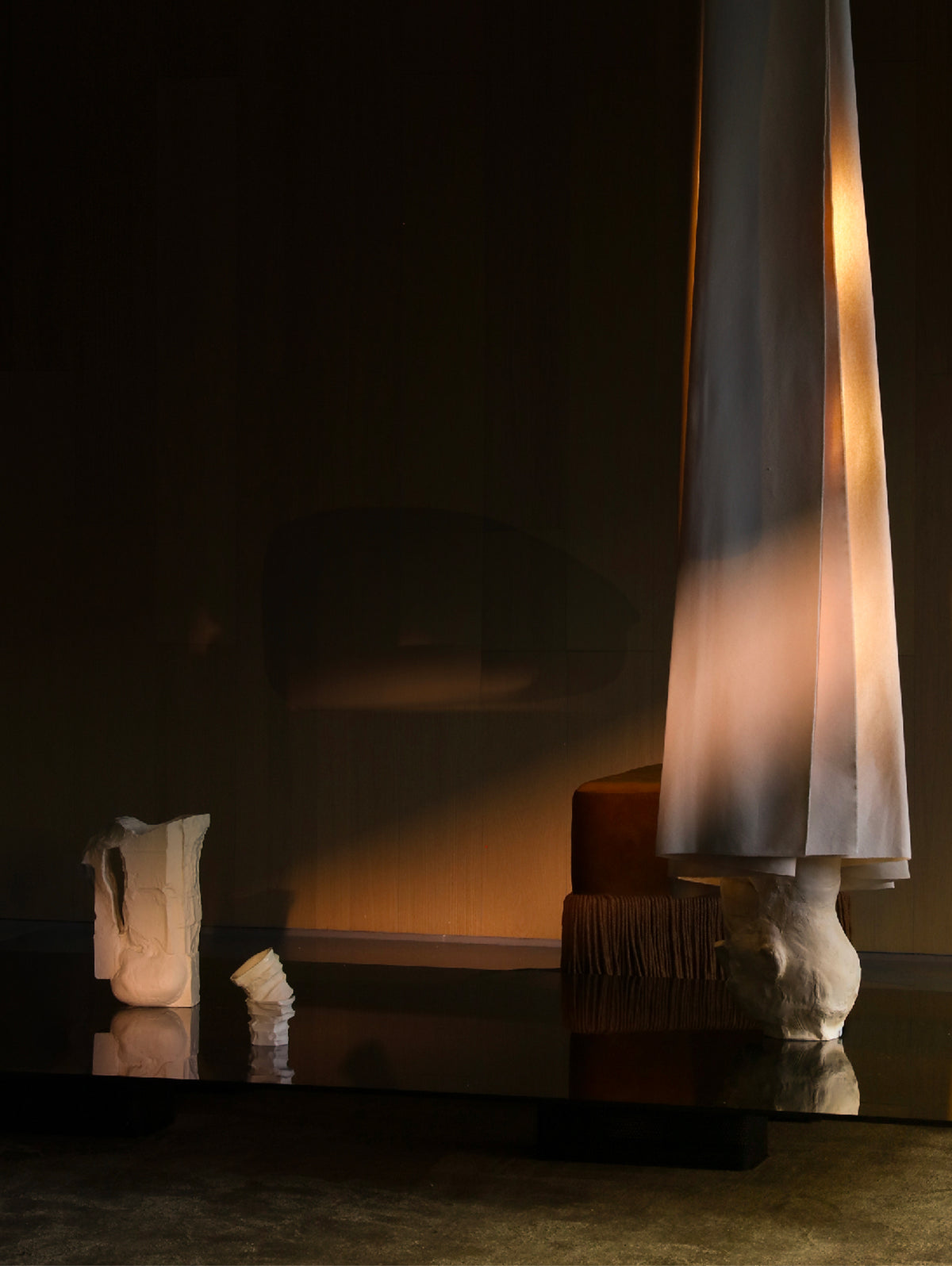
Your work is being shown alongside Armadillo's rugs in our Los Angeles and San Francisco showrooms. Does knowing your pieces will sit in that context change how you think about a piece once it leaves the studio?
Yes, completely. A rug creates a ground for the work. It brings warmth, softness, and color. It frames the room. There's something very physical about it too. It invites you to touch and to feel. I love seeing my pieces in relationship to that.
Once the work leaves the studio, I get to see relationships I wouldn't necessarily have imagined myself. Seeing the work at Armadillo was especially exciting because Rosy Strazzeri Fridman, who curated the installation, created new relationships. By introducing a glass platform, she added reflections, shadows, unexpected shifts in scale and a kind of theatrical drama. The whole arrangement feels almost like a scene from a film. It's inspiring to see the work take on a different life once it leaves the studio.
ORA is an ongoing body of work. What's next for it, and for you
ORA opened up a deeper exploration of how I can bring sculpture and light together. I'm interested in work that resides somewhere between categories. I know there's much more for me to explore.
This fall, I'm also working on a collaborative intervention in New York, in a space where fashion, music, art and hospitality are already presented together. I'm contributing work to a place that already has its own aesthetics. When I think about places that have stayed with me, there's often a sense of discovery at every turn: an object, a corner, a moment that struck a chord. I'm hoping to contribute something like that to this space, to illuminate it in some way and create moments that stay with people.